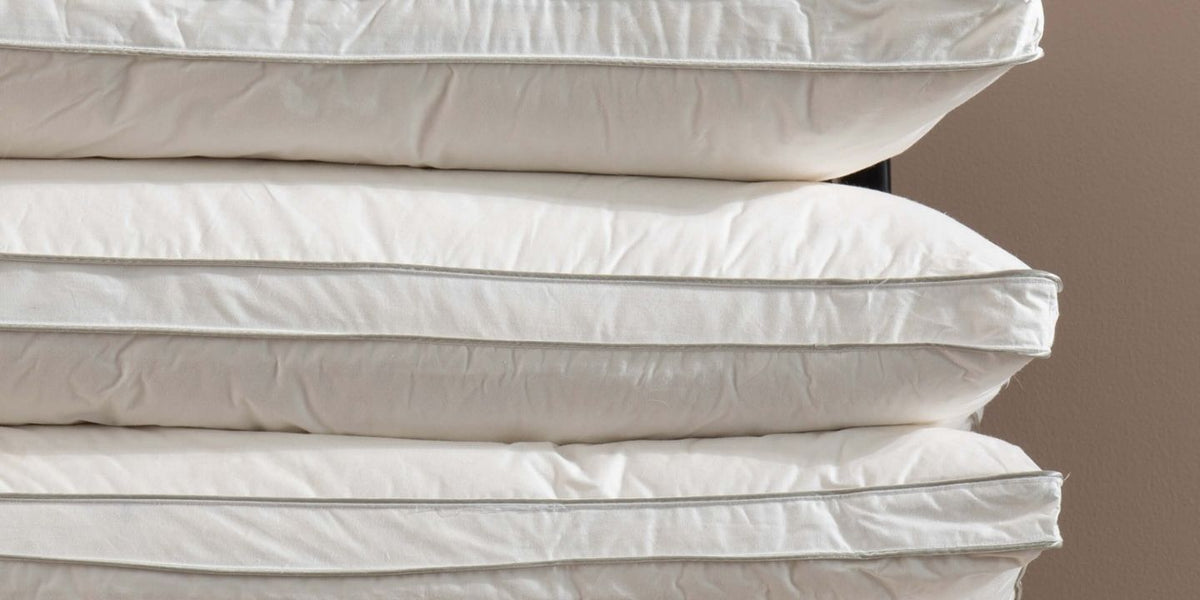



Choosing a pillow isn’t just about deciding whether you prefer something soft or firm. What’s inside your pillow can make a big difference to how it feels, how supportive it is and how well it suits the way you sleep.
So, what are pillows made of? From cloud-like down and supportive memory foam to naturally temperature-regulating wool, there are plenty of different pillow fillings to choose from.
Here, we explain the most common pillow fillings, their benefits and who they may be best suited to, so you can find the right option for a more comfortable night’s sleep.
What are pillows made of?
Pillows can be made using either natural or synthetic fillings, with each material creating a different feel and level of support.
Common pillow fillings include:
-
Down
-
Feather and down
-
Wool
-
Silk
-
Memory foam
-
Synthetic fibres such as hollowfibre and microfibre
Some pillows also combine different fillings to balance softness, support and breathability.
The best choice will depend on your preferred sleeping position, how firm you like your pillow and whether you tend to sleep hot or cold.
Down pillows
Down is the soft, fluffy layer found beneath the outer feathers of ducks and geese.
Because down clusters are light and airy, down pillows tend to feel luxuriously soft and mouldable. They compress easily beneath your head and can be plumped back into shape when needed.
A higher percentage of down will generally create a softer and lighter pillow.
Best for:
Down can be a good option if you:
-
Prefer a softer pillow
-
Like to shape and plump your pillow
-
Want a light, luxurious feel
-
Sleep on your front or prefer a lower pillow
Soak&Sleep’s current range includes duck down, goose down and Hungarian goose down options, with different ratios of down to feather available.

Feather and down pillows
Feather and down pillows combine the softness of down with the additional structure of feathers.
The feathers provide more support and weight, while down adds softness and loft. The exact feel will depend on the proportion of each filling.
For example, a pillow containing a higher percentage of feather will generally feel firmer than one containing mostly down.
This makes feather and down a versatile choice for sleepers who want a balance between comfort and support.

Wool pillows
Wool is another natural filling and is particularly useful for sleepers who are conscious of temperature.
Wool fibres naturally help regulate heat and manage moisture, helping to create a comfortable sleeping environment throughout the year.
Wool pillows often have a slightly firmer, more substantial feel than down and tend to hold their shape well.
Best for:
A wool pillow may suit you if you:
-
Tend to get warm at night
-
Prefer natural materials
-
Want a pillow with a little more structure
-
Like a supportive yet comfortable feel
Soak&Sleep currently offers New Zealand wool pillows designed around wool’s natural temperature-regulating qualities. 
Wool vs down pillow: which is better?
Neither filling is necessarily better — they simply offer a different sleeping experience.
Choose wool if you prefer a slightly firmer feel and value natural temperature regulation.
Choose down if softness, lightness and a more cloud-like feel are your priorities.
Down is also generally more mouldable, whereas wool tends to feel more structured.
Memory foam pillows
Memory foam responds to heat and pressure, allowing it to mould around the contours of your head and neck.
Unlike down or feather pillows, memory foam doesn’t need regular plumping and tends to offer more consistent support throughout the night.
There are several types of memory foam pillow. Traditional solid foam provides a stable feel, while shredded memory foam offers more flexibility and can feel closer to a traditional pillow.
Best for:
Memory foam may suit you if you:
-
Prefer firmer or more structured support
-
Sleep on your back or side
-
Want your pillow to contour around your head and neck
-
Prefer a pillow that keeps its shape
Soak&Sleep’s range currently includes both shredded memory foam and cooling memory foam pillows.

Wool vs latex pillows
Wool and latex can both offer supportive alternatives to feather and down, but they feel quite different.
Wool feels naturally springy and breathable, while latex tends to have a denser, more responsive feel. Latex usually bounces back quickly when pressure is removed, whereas wool creates a softer, more traditionally cushioned feel.
If temperature regulation and natural fibres are particularly important to you, wool may be the more appealing choice. If you prefer a resilient, highly structured pillow, latex may suit you better.
Silk pillows
Silk is naturally lightweight and breathable, making it another luxurious pillow filling.
Silk-filled pillows usually have a soft, lightweight feel and can be particularly appealing to those looking for natural materials without the loftiness of feather or down.
Soak&Sleep also offers both silk pillows and synthetic pillows blended with silk for additional softness and comfort.

Synthetic and hollowfibre pillows
Synthetic pillows are generally filled with man-made fibres designed to recreate the comfortable, plump feel of natural fillings.
Hollowfibre contains fine fibres with hollow centres, helping to trap air and create loft without adding too much weight.
Microfibre is another popular option and can be engineered to create a particularly soft, down-like feel.
Synthetic pillows are often easy to care for and can offer excellent value, making them a practical choice for everyday use or guest bedrooms.
Soak&Sleep’s best-selling Soft as Down range, for example, is designed to provide a soft, down-like feel using synthetic filling.
Natural vs synthetic pillow fillings
If you’re deciding between a natural and synthetic pillow, consider what matters most to you.
Natural fillings such as down, feather, wool and silk offer distinctive qualities including softness, breathability and natural temperature regulation.
Synthetic fillings can offer a soft and supportive feel at a more accessible price point, while often being easier to care for.
There’s no single option that works for everybody, which is why it helps to think about both the filling and the firmness of your pillow.

Does your sleeping position affect which filling you need?
Your sleep position can help determine both the filling and firmness that will feel most comfortable.
Side sleepers often benefit from a fuller, firmer pillow that fills the gap between the head and shoulder.
Back sleepers usually need medium support to keep the head comfortably aligned with the spine.
Front sleepers generally benefit from a softer, shallower pillow to avoid pushing the head too far upwards.
The right combination of filling, height and firmness should help keep your head and neck comfortably supported.
Cushion vs pillow: what’s the difference?
Although the terms are sometimes used interchangeably, pillows and cushions are designed for different purposes.
A pillow is primarily designed to support your head and neck while you sleep.
A cushion is usually decorative or used to provide additional comfort when sitting on a sofa, chair or bed.
Their fillings may sometimes be similar — for example, feather can be used in both — but sleeping pillows are designed specifically with overnight comfort and support in mind.
Which pillow filling is best?
The best pillow filling ultimately comes down to how you like to sleep.
Choose down for lightweight softness and luxury.
Choose feather and down for a blend of softness and support.
Choose wool for natural temperature regulation and a more structured feel.
Choose memory foam for contouring, consistent support.
Choose silk for a lightweight, breathable natural filling.
Choose synthetic or hollowfibre for a practical, easy-care pillow with plenty of choice when it comes to firmness and feel.
If you’re still unsure, our Pillow Buying Guide can help you choose according to your sleeping position and preferred firmness.
Find the right pillow for you
A good pillow should help you feel comfortably supported without forcing your head or neck into an unnatural position.
Explore our full range of pillows, including down and feather, wool, memory foam, silk and synthetic options, with different firmness levels designed for front, back and side sleepers.